Sunday, November 11, 2018

Psychrophile Dating Profile

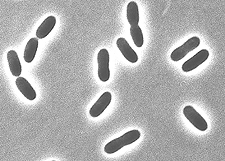
If you like long walks on the beach, keep on scrolling. The colder, the better! Extravagant ski trips in Antarctica is something you could expect with me as well as trips deep into the ocean. (I bet your mesophilic dates couldn't do that). I live in places that most don't, so I enjoy meeting new people. That being said, if you can't handle my lifestyle, its not going to work out. My living situation is pretty specific and I won't change for anyone! I have pretty similar characteristics of other microbes out there, I'm just way more interesting and tough. Basically you can always count on stealing my jackets and hoodies since I won't need them anyway (I know girls seem to really dig that).

psychrophile

I don't have a lot of pictures of myself, selfies aren't really my thing.

Saturday, November 10, 2018

Piezophile Dating Profile

Piezophile Dating Profile

Hi! You could say that I’m under a lot of pressure. Literal pressure from the ocean and pressure from my family to bring someone to Thanksgiving dinner this year.. so now that THAT’S out of the way, I really am really cool. Like really cool—often extremely cold, so I need someone to warm me up. The reason I think I’m still single is that I’m so far away from everyone fun! But long-distance relationships can be fun, right? 😉 A fun fact about me is that I speak a little Greek. Well, I only know one word: piezo which means pressure. Even though I’m not fluent it’s OK—that one word is in my name so it’s still cool. I don’t see a lot of sunlight, so I’d love for a partner to take me on an adventure! Even though there are a lot of piezophiles, I’m unique because I have curves in all the right places.

Ready to meet,


Xenophyophore the piezophile – (Such an exotic name, right?)

Friday, November 2, 2018

Week 8 -- 02 Nov 2018

Week 8 Growth


The presence of five stratification layers are evident in the sediment of the control flask.  The bottom ~9.5cm appears to be just sediment, with no distinguishing characteristics, and likely has not developed into a stable community as of yet.  A thin, dark brownish-red band has appeared directly above that layer, occupying 1-2mm in places.  This layer is likely anaerobic and protected from the bulk of UV radiation.  Given its position, it is likely composed of sulfur bacteria.  A thick green layer sits atop that, occupying 2-2.4cm.  This community is likely composed of nonsulfur and cyanobacteria.  A thin darker green layer atop that, ~4mm, is likely a community of cyanobacteria, and the remainder of the column is occupied by 3cm of green water, likely containing diatoms and cyanobacteria.

Stratification in the 4% flask is less clearly distinguishable, though at approximately 10cm from the bottom an obvious dark green color change is apparent.  This developing community is likely within the photic and oxygenic range, and likely contains cyanobacteria and diatoms.

In the 8% flask, the majority of the sediment appears unremarkable.  A thin layer (~2mm) separates the sediment from the water layer above.  This layer appears dark, blackish green, likely containing any organisms capable of thriving in the saline environment.  A similar layer can possibly be observed at the top of the sediment in the 12% flask, though that corresponding layer is less than 1mm thick.  Turbidity in the water of the 12% flask is also notably lower than in the other flasks.
Figure 1 - Front view.  Left to Right: Control, 4%, 8%, 12%

Figure 2 - Top View.  Left to Right: Control, 4%, 8%, 12%

Figure 3 - Control

Figure 4 - 4% Salinity

Figure 5 8% Salinity

Figure 6 - 12% Salinity

Table 1 - Summary of Stratification in columns.
Darian Out.

Monday, October 22, 2018

Week 6 October 17th

Appears to still be very little change in the columns up to this point. There were no signs of any new stratification levels as far as what could be seen. Let's hope for better results in the future!

 Control group 

 4% salinity

 8% salinity

12% salinity

Salinity
Stratification Layers
Height
Control
Water
3.5 cm
Sediment Mixture
11.6 cm
4%
Water
3.1 cm
Sediment Mixture
11.0 cm
8%
Water
3.3 cm
Sediment Mixture
11.7 cm
12%
Water
3.1 cm
Sediment Mixture
11.9 cm


Monday, October 15, 2018

Week 5 (Oct 12, a little bit behind the curve.)

Week five comes in late at week 6, (apologies to all for the timeline anomaly!)
The columns are definitely growing...stuff (ewww....too cool!) It appears that the control is in the lead for stratification, but then I'm a geologist in the making, what would I know about stratifying layers of microbial growth? To restate that, it appears that the control column has the greatest growth of green micro organisms. The layers may be obscured by the prolific growth. A better visual of the layering or stratification can be seen in the 4% saline column; much less growth of the brightly colored, happy looking bacteria though.  As stated, this post is behind the times so may be redundant with another post, (apologies again.)

The columns (10/12/15)

Control, window side

4% saline, window side

8% saline, window side (sensing a pattern here?)

12% saline, again from the window side.

Top view of our protein shakes...ewww, just kidding.


Salinity
Stratification
Height
Control
water
4.2cm
Sediment
12.2cm
4%
water
3.8cm
Sediment
10.3cm
8%
water
3.8cm
Sediment
10.8cm
12%
water
3.4cm
Sediment
11.6cm


Sunday, October 14, 2018

Week of October 8th

This week, the most notable change to the Winogradsky columns was the dramatic growth of the cyanobacteria in the 0% salinity column. The other columns have had little change, but the 4% column is beginning to show clearer signs of stratification. Because the first column has had such dramatic growth of cyanobacteria, it might actually obscure other layers, preventing us from counting them in the future. Hopefully other layers will grow enough to be clearly visible.
Figure 1. 0% salinity column with a large amount of growth.

Figure 2. 4% salinity column with some stratification.

Figure 3. 8% salinity column

Figure 4. 12% salinity column

Figure 5. All columns from 0% (left) to 12% (right). The column on the left has cyanobacteria growing even on the plastic wrap. Condensation obscures the view, but there is some floating matter on the other columns.

Salinity
Stratification Layers
Height
Control
Water
3.5 cm
Sediment Mixture
11.6 cm
4%
Water
3.1 cm
Sediment Mixture
11.0 cm
8%
Water
3.3 cm
Sediment Mixture
11.7 cm
12%
Water
3.1 cm
Sediment Mixture
11.9 cm

Monday, October 1, 2018

September 21 Columns

Week 2 Growth - 21 September 2018


Very little has changed since last week. Additional condensation has been noticed (see figure 6). No additional stratification layers have been observed.


Figure 1: Control
Figure 2: Salinity 4%
Figure 3: Salinity 8%
Figure 4: Salinity 12%

Figure 5: Front View
Figure 6: Top View

Salinity
Stratification Layers
Height
Control
Water
3.5 cm
Sediment Mixture
11.6 cm
4%
Water
3.1 cm
Sediment Mixture
11.0 cm
8%
Water
3.3 cm
Sediment Mixture
11.7 cm
12%
Water
3.1 cm
Sediment Mixture
11.9 cm


Manganese: The Metal That Helped Change Earth

When you think about what makes life possible, you probably think of water, oxygen, and sunlight. But there's another important ingredie...